Showing posts with label digital bucket. Show all posts

Tuesday, 15 March 2011

Android Vs. Apple: Another War Wages On

  Oh yes, another war has started! Surely there is room for two mobile OS's (Operating System)?? 
                         ........Oh no, both are fighting for the #1 spot in superiority in mobile technology!

   I can remember when phones were like bricks, yes I'm 19 years old, so not like this:

A possibly lethal
weapon
                                                      
 ..........but more like this:

Small and Ugly
GREAT!

  Back then was a time where mobile phones were just used to call and text people, crazy I know, but now they are utilized as a gaming platform via things called applications or 'apps'. These apps are small programs which are downloaded and installed onto your phone. In the good-old days you would navigate your phone via endless menu lists, now in the 21st century you navigate via a graphical user interface covering an OS. These OS are very similar to ones that work on a laptop or desktop computer and are the ones that are in battle with each other. But this battle has been seen before, on computer OS's MacOS (Apple) and Windows (Microsoft). Now it is the war of the phones, Apple's iOS and Google's Android!


   In this blog post I will be focusing mainly on the difference in the two OS's because they are basically opposite in how they function in terms of sharing with their users making this war very interesting.
'The Tech Herald'
  I will begin with Android first. This relatively new mobile OS has taken the world by storm, mainly because there was a gap in the market. The phone universe needed a new OS, I mean, there was Apple but nothing else really that captured the attention of the customers. The thing is that it is not restricted to only one type of phone, unlike iOS, Android can be installed and used on Samsung's, LG, Motorola, and HTC's. This allowed the customers to keep to their preferred phone make while still making use of the Google OS. Another thing to why it has been attractive to these phone manufacturers is that they can put their own slant on the OS, for the Samsung Galaxy S, the phone is run by Android but Samsung have added their own menu system to keep it their own.


See the video above? Android was released in 2008 and the video clearly shows how popular the OS has become. One of the main reasons why it has become so successful is because of its Open-source software. This kind of software is the tipping point to who will eventually win this OS war because Apple doesn't use this, they are all corporate like. The term Open-source will be explained more later. 


  Now its Apple's turn! Apple are know for their uber-cool designs and unique products and their software is similar. Apple's iOS was first seen on the original iPhone and nothing has really changed in terms of looks. Today some people are becoming a bit bored of the same look on every software update, compared to Android, who updates regularly with alphabetically organised software names such as Froyo, Gingerbread and Honeycomb (yea! their cool!). But mentioned before, Apple do not support Open-source software. Ok, now I will talk about it...

Open-source is a term used to describe the allowance of the final programming code to the public. It is allowed to be altered and used to structure other creations. From the website, How Stuff Works I think they explain it very well:

"Most software that you buy or download only comes in the compiled ready-to-run version. Compiled means that the actual program code that the developer created, known as the source code, has run through a special program called a compiler that translates the source code into a form that the computer can understand. It is extremely difficult to modify the compiled version of most applications and nearly impossible to see exactly how the developer created different parts of the program. Most commercial software manufacturers see this as an advantage that keeps other companies from copying their code and using it in a competing product. It also gives them control over the quality and features found in a particular product.
Open source software is at the opposite end of the spectrum. The source code is included with the compiled version and modification or customization is actually encouraged. The software developers who support the open source concept believe that by allowing anyone who's interested to modify the source code, the application will be more useful and error-free over the long term."
  With Android using this they encourage the users of this code to experiment, but what is to stop them from creating something completely different and compete with the platform? On their website they describe their Governance Philosophy, in it they state:

"Uncontrolled customization can, of course, lead to incompatible implementations. To prevent this, the AOSP also maintains the Android Compatibility Program, which spells out what it means to be "Android compatible", and what is required of device builders to achieve that status. Anyone can (and will!) use the Android source code for any purpose, and we welcome all such uses. However, in order to take part in the shared ecosystem of applications that we are building around Android, device builders must participate in the Compatibility Program.
Though Android consists of multiple sub-projects, this is strictly a project-management technique. We view and manage Android as a single, holistic software product, not a "distribution", specification, or collection of replaceable parts. Our intent is that device builders port Android to a device; they don't implement a specification or curate a distribution."

  Now that the source code has been released the community can begin to change and alter it, the community can download the Android Software Development Kit (SDK) allowing them to use the tools to create their open Apps (Applications are one of the main factors to a successful mobile OS). The users of this require no skill at all and once created, can be placed onto Android's Marketplace. This is at the other end of the scale for Apple. Apple as I have mentioned before is a very very corporate business and expects only the best content for its customers. With this in mind your average, Tom, Dick and Harry can't get creating. A subscription charge must be paid ($99 yearly) to get use of the development tools that Apple provide. This allows only the more dedicated developers to get creating leaving all the novice's out in the cold. In my opinion this is a good filtering system. Now, I own an Android phone so I'm entitled to say this, the market place is clogged up with poor amateur apps that are not worth downloading. Whereas on Apple's App Store there is rarely a very poor game mainly because they have experienced developers working in their circle. Oh but you may be thinking surely any novice can pay the $99 and get going, well no. Apple have a rigorous application process. This process can take up to months and even then, the app may still get rejected. The rules are also tightly adhered to, a submitted application is tested and each rule is applied, if it fails it does not get onto the app store - simples!


Here is an example*: A man called Nick Bonatsakis submitted his 'DuckPhone' to the popular fruit business. His app was tribute to the phone seen in Jersey Shore. After a wait the app creator received this:

“Dear Atlantia Software LLC,

We’ve reviewed your application DuckPhone and we have determined that this application contains minimal user functionality and will not be appropriate for the App Store.

If you would like to share it with friends and family, we recommend you review the Ad Hoc method on the Distribution tab of the iPhone Developer Portal for details on distributing this application among a small group of people of your choosing or if you believe that you can add additional user functionality to DuckPhone we encourage you to do so and resubmit it for review.

Sincerely,

iPhone App Review Team”
*Example from crunchgear.com

  Notice the reason to why this was rejected: 'Minimal User Functionality' - Whaat!? This is coming from a store that has accepted the app getting the user to hold a button for as long as possible, this to me is minimal user functionality! Later on in the source from crunchgear.com the words, "Apple wants a pristine App Store and will get it at any cost". This summarises their system very well in my opinion.

   Their not going easy on Android too, they don't want anything to do with them at all, the word 'Android' has been banned from their store and could result in your application being banned - wow, vicious. 

   The war will continue I'm sure for years to come, with two very strong competitors in the ring it is hard to tell. Apple with their design and marketing skills and Android with Google as their daddy.


Saturday, 12 March 2011

Gamers Rewarded Through Faulty Games

  If you have ever played a video game then you will have come across multiple glitches I'm sure, you know the ones, your walking around and suddenly you get stuck on something invisible? Or you can't advance any further over the map because of the 'invisible wall' or 'pipeline'? These are all typical when playing, but can some glitches be used to give the player rewards?

  A glitch is simply a programming error that is hard to troubleshoot because it is not apparent to all players and may not happen all the time. Players can use these errors in the computer code to access areas that may be difficult to get to or to get an unfriendly advantage on other players - these people are know as 'Glitchers'. Although most glitches are unintentionally in the games code the developers may put some in on purpose, these give the players some sort of reward, not to help them advance in the game, but just some sort of 'thanks for playing our game and exploring the boundaries, here is a little prize' sort of thing. These are know as Easter Eggs in the video game community.

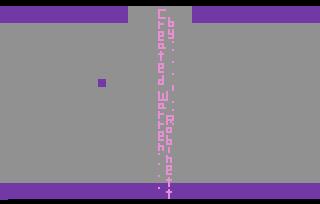
  The first evidence of an in-game Easter Egg is in Atari's retro game "Adventure", it it the player's reward for experimenting with the game. To get this egg the player must:

1. Get the bridge 
2. Take it inside the black castle 
3. Find the central room that causes the screen to flicker. You must have an object with you to see the flicker, as it takes 3 game sprites to cause flicker (you, the "dot" and the 3rd object, in this case the bridge) 
4. Use the bridge to get into the secret chamber in the middle of that room 
5. Inside that the secret chamber there is a "dot" -- pick it up by pressing into the lower right corner of the chamber. 
6. Take the dot to the main hallway (below the golden castle) 
7. Once there the dot will cause one of the hallway barriers to disappear. Note that you need to have another object in the room (key, sword, duck, etc.) to make the barrier disappear. You also usually have to have the "dot" in front of you to go through. 
8. You can then enter a hidden chamber that lists a message from the programmers

  The history behind this first Easter Egg is that the creator, Warren Robinette, didn't like the fact that Atari did not allow its programmers to get credit for making the game. In his frustration he altered the code allowing people to discover who the talent really was. The message from the programmers mentioned in point 8 is simply his name:

The message: "Created by Warren Robinette"
  Ever since, game developers have been doing the same, rewarding players for simply exploring the boundaries of the game. Some examples are shown below:

In this Easter Egg notice how there is no glitch. This is the case in some games, instead of using a fault in the game the developers just place funny events into hard to reach areas, almost all the time they are funny. It is a surprise to the gamers because they are out of place and often link to other popular games, in this case: Portal developed by Valve.

  This next one is from Halo: Reach on the Xbox 360, check it out:

This sort of Easter Egg is one that provides the most reward sensation in my opinion. It is hard to get to firstly, the switch placed at the very edge of the map and then the spawning into an unknown tunnel. This egg really keeps the player guessing into what is happening.

  One from Assassins Creed 2:


This similar to the Fable 3 one above rewards the player for being curious.

   GTA4:


  I find Easter Eggs a really interesting point to look at because the developers harness glitches and turn them into something entertaining. They can also just put random things into its structure to make it more interesting too. In an interview from VideoJug they ask a game developer a series of questions, one being, "Why do developers put easter eggs in games?"
His answer:

"I think developers put Easter eggs into games just for fun. It's a nod and a wink to the fans; it's a nod and a wink to the players. An Easter egg is usually a little bit cheeky, but it's good fun and they're always meant in good humour."

  So, they are Easter Eggs in video games...

Saturday, 12 February 2011

Search Engines and Information Overload

  Think about this for a second, what is your home-page? What is the first page that opens on your browser? I'm pretty sure it may be Google or another search engine. It may not, but most people reading this will have it set.

Ok, think about this; how do you actually get to a website that isn't in your favourites? You wont memorise the URL, well I hope not, instead you will type into a search engine the name and from there you will gain access.

  With the internet's primary use to share information, we navigate its entirety via search engines (Google, Yahoo!, Ask.com and Bing), but do these give websites a fair share in the availability to be seen by the public?

  Search engines use rankings when you type certain key words into its search bar. The rankings are based on how popular the site is, how accurately matched it is to your query and now, how much they have been paid to be higher in the list that you see making it more likely for it to be clicked on. Once you click 'search' the engine goes through 3 stages:

1) Web Crawling
2) Indexing
3) Searching

(NOTE: This is quite complicated so bare with me..)
  In the Web Crawling stage the engine uses a bit of AI (see my Are We Able To Create AI post for more information), sometimes known as a spider - a designed program that searches through web links, to gather the initial stages of the search. Next is the Indexing stage, here the program organises the web pages in order  matching the words or phrases that was entered in the search box. The words or phrases that are looked through on the sites are call Meta-Tags. These tags are specific or key words set by the site creator allowing search engines to pick them up, an example would be this blog post. This week's topic is on search engines, information, internet etc. these will all be used as tags that will make it easier for it to be noticed. Once that has been done the final Searching stage begins, this is when all of the sites and the result of your search is displayed. Remember this all takes seconds, sometimes less. Here I'll show you, I'll do a search on Google now on the word 'pizza': lets see how long it takes...


...wow, 0.21 seconds! This just proves that search engines are the most helpful tool on the internet, look at all the results I recieved, '197,000,000', I don't even know what that is...I think 197 million? Anyway, that's allot of information right? I would say, more than enough, which is why this blog post is partly named 'Information Overload', its almost like Google is boasting the amount of results it gives - arrogant search engine!

  With this large amount of information, there should be a fair chance that smaller more independent businesses, but there isn't. When I searched 'pizza' the top three pages were:

save image

This is most probably because Dominos and Pizza Hut have paid Google to be a higher rank in it's servers. This is wrong in my opinion because it means that an independent place is stuck on page 10 of the search, the 10th 'O' in Google's interface or number 100, 000 in the list - and let's face it, your not going to sieve through every link to the 10th page.

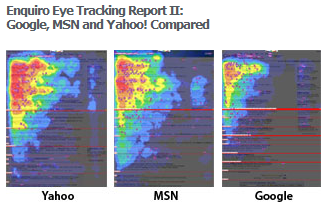
  There have been experiments done to compare how users interact with the screen (the positioning of the data from web searches), the experiments were conducted by Gord Hotchkiss:


Notice the following:


- how tightly Google keeps attention focused on the upper left corner of the search results
- how attention drops off the further down you go on the page
- ads in the right column generally do not get much attention

(www.training.seobook.com/google-ranking-value)


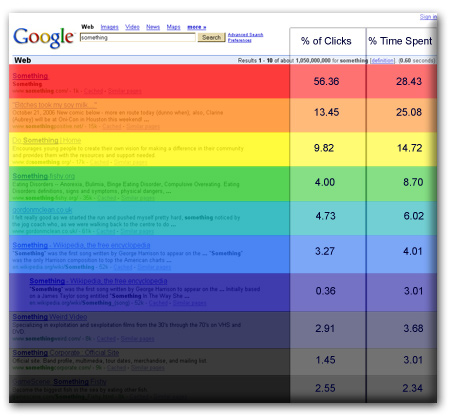
  Notice on this picture, it shows how long each link is looked at along with the amount of clicks it receives. It shows that links at the top (mainly 1-6) are most likely to be seen, as it gets further down the page some aren't even looked at - see the eye test above.

  Staying on the idea about Google rankings, in a post on ramzws.com it talks about how much you spend on getting a website created but then not even making it onto Google. I think this quote, "If you can't find your website in Google then just how much of a bargain was that $495 website?" is a great one to focus on. Because search engines are the encapsulating tool when it comes to browsing the web, if your website doesn't appear then it is almost lost in cyberspace, hardly anyone will come across your site unless they enter in very specific key words. In the blog post on 'ramzws' it says that a site costing $5000 with more pages will probably be seen on search engines more than one with a couple of pages worth $400. I reckon this is wrong, it completely isolates the more independent companies wanting to be seen on the internet although I would agree that it is some what a competitive area, companies battling it out to get to #1 on Google but they must have as much right as the larger companies surely?

Friday, 19 November 2010

Augmented Reality - What do they really offer to the 'Real World'?

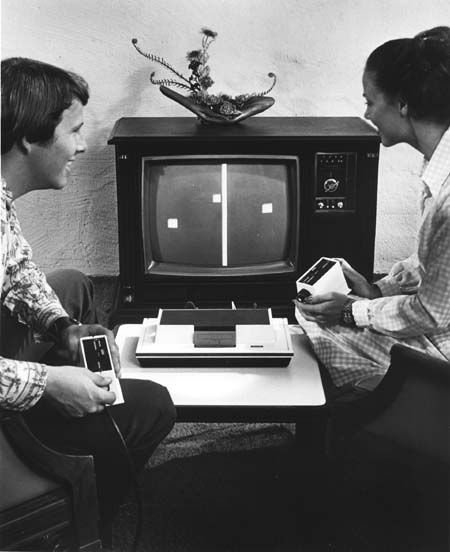
   The advance in computer graphics is ever increasing, I mean looking back in 1970 to when Pong was first introduced and then to now, 2010 the journey has been massive.

Wow! They're having a blast!
Pong 1970
ll
ll
V
Too Human - Xbox 360 today! Wowza!
 As the technology has advanced the line between the game world and the real world has blurred together and researchers and tech boffins are now "pulling graphics out of your television screen or computer display and integrating them into real-world environments" (howstuffworks.com).

 This new technology is named Augmented Reality and is quite something I have to admit!

So, what are the uses and potential of this new technology? you might ask, well my friend, keep reading and all your questions will be answered.

  At the moment Augmented Reality (AR) is still in its infancy but to be honest some of the things achieved at this stage is amazing. Take a look at how AR could change how we interact with the world.

  In that video notice how all the AR elements were triggered by a 'marker'. This uniquely designed image is programmed into the software meaning that at this stage, unfortunately they can only be used with that specific camera but the glasses that people were wearing allowed the AR to be that more portable like the children's book. The book had the specific markers on the page and when the child looked through the glasses the images were created. But do people want to walk around with large glasses? This debate is very similar to the new 3D technology where allot of people negate the possibility of buying a 3D tv because of the glasses. As tv culture is very much social and communal; wearing 'geeky' glasses is barrier. 
But has this been over come with the introduction of designer glasses? 

Not just any 3D glasses. These are premium Armani
3D glasses! Would you wear them?
  I wonder if the 3D glasses from Armani would improve the progression of AR, just imagine walking down the street with those snazzy shades and getting information all around you: hmm very tempting in my opinion!
  
  AR offers the real world more, in the area of advertising. In the future if you are wearing your designer glasses and glance over at a store such as HMV then there could be a list that appears giving sale information, new releases and special offers. But at this time, in its infancy the methods are still developing but there are some that look pretty cool. 
  Using the unique printed markers companies can print them in a magazine and instruct the customer view them through their web-cam through their site. An example is with cars, a customer can see a digital 3D projection of the model: A Mini Augmented Reality. 
AR is used to show what you would look like if you were wearing a particular item of clothing, a shade of makeup or even watches which is what customers experienced at Selfridges, London. The markers are still used here but the technology and the concept is still amazing, in the future the markers may not be there and the software knows where to place the 3D image. 
Another example is to advertise tv programs. The Vampire Diaries has become a hit in the US and the UK and this AR demo was set up in New York and Loas Angeles with the slogan "Vampires cant see their reflection...can you?". In the video one of the ladies experiancing it says, "I would look at this [the AR advert] than the sign up there2, I think that encapsulates the who idea of the new advertising technology that is named as 'storescapes'. 
This next one is amazing in my opinion: Avatar Storescape. The idea of emailing the pictures to the customer adds another dimension making that targeted link between film and audience. 
  This sets a new era for advertising and makes the audience involved, something that didn't happen when watching them on tv or in the movies.

  One other AR I came across from Youtube is building projections. The whole building is mapped by cameras allowing powerful and precise projections to be emitted onto the surface with realistic effects. This magnifies the idea that the boundary between real life and the digital life is dissolving. Check out these amazing videos:

Ukraine Independence Building
Realistic Building Projection
Other Amazing Building Projections

  AR has some commercial products too. Restaurants are taking use to this new tech making the customer experience that much better now that it is part digital, the iBar is revolutionary although not holding any purpose but to entertain it is a great addition the the AR family: The iBar. Another example is the Microsoft Surface shown at CES 2008, this table allows users to interact digitally with their surroundings such as bar cups etc or even in shops like the man described using product tags. It becomes an interactive tool that draws the digital reality and the real life together.  

  I thnik that at the moment the main area that is homing in on AR is advertising companies, in the future it could expand further to the general public but people do not want to pay large amounts of money for new tech that is still in infancy. But the direction that AR is going is very promising and extremely exciting indeed. 

Sunday, 14 November 2010

Interfaces - Making using a computer that much easier

So your using a computer and you are looking at the screen and suddenly wonder how you are navigating through the system; well, that my friend is the Interface.

  A UI (User Interface) can be seen everywhere, to you getting money out of a cash machine, calling someone on your new iPhone or Android phone or sending an email on you computer. It is these interfaces on your phones and computers that will be placed under the spotlight today.

  Beginning with a GUI: This interface allows the communication between computer and user via graphical means i.e. Windows 7's icons and windows. The GUI was a revolution in computer history as it allowed everybody access to a computer despite their computer skills which is what was need beforehand i.e MS-DOS was an  early operating system that was used on many personal computers and required text commands to be entered to give the computer commands. These text commands were often long and were not very user friendly to use for example, to copy a file to another location the user could not simply click-and-drag back then they had to type in:

"copy from [source\filename] to [destination\folder]"

Only until upgrade to MS-DOS 5 was a very limited GUI introduced including mouse operation instead of using solely the keyboard. Check out the promo vid of MS-DOS 5.

  Without the help of Ivan Sutherland and Doug Englebart the GUI would not be possible. Ivan invented the Sketchpad which was the first move toward the interfaces we use today. It allowed the user to create shapes on a screen by using a light pen and was a massive leap to how we interact with computers today.

The system still had a size problem to hurdle
The revolutionary user interaction tool
  Doug Englebart was the person responsible for allowing you to move that little mouse around the screen although back then they were massive, imagine dragging a large brick across that lovely new varnished table.


l l
l l
l l
V


  With technology booming in the 21st century new ways of interacting with a computer are always arising whether it being speech or now even movement (i.e. Xbox Kinect, Nintendo Wii or Playstation Move) but here I will be focusing on how websites are viewed and present on GUI's on computers and compare them to GUI's on mobile phones.

Facebook (Computer)


  This site is becoming massively popular and it is now essential to have constant access to this is you are out of the house or office away from your computer.
  On the computer everything looks simple with the 1. logo and the navigation sections along the top of the page and down the left side, tools such as your profile, photos and Fb games are located here. All your friends can be seen here too 2. Down the centre of  the page is your main personalised information appropriately named by Facebook as your 'news feed'. 3. Along the right side of the page is adverts, your events and some information about how to use the site.

Click for full size!!
The website is very easy to use and the same is for its mobile page.

Facebook (Mobile)

  When wanting to use Fb on the move there is either the application of the specifically designed mobile site. The mobile site automatically detects it being accessed by a mobile device and so links it to that format. The mobile site is very easy to use and much like it application sister condensed to the most important information. Although the facebook games cant be accessed from the mobile device that is not much of a problem because while moving around you just want to update you status once in a while.

The mobile site
The app look
   The application as you can see uses a basic GUI to make its use easier. The news feed icon looks like a folded paper and the chat looks like dialogue bubbles.

HMV (Computer)


  This site is very popular for buying games, music, films and electronics; but how does it fair on both a computer and a mobile?
  
Click to view full size
  This site is very visual and hold lots of graphics meaning that its load time is considerably longer than say, Facebook's simple design.
  The design here looks very appealing with the negative space emphasising the main information and the large icons and promo adverts. But on this site there is one element that struggles to cross platform to the mobile world and that is - flash.
  Flash can't be used on any old generation mobile device nor can it on an apple, but recently with Android's firmware update of 2.2 Froyo for its devices flash 10 is supported. But for the majority flash is a large hurdle that cant be overcome easily.